
Can Any Dog Be a Service Dog? The Truth About Training and Temperament
If you’ve ever seen a well-behaved service dog calmly walking through a busy store or helping their handler navigate the world, you might have wondered: Can any dog really do that? The short answer is: not quite. While service dogs come in all shapes, sizes, and breeds, not every pup is cut out for this important job.
A service dog isn’t just a pet; it’s a highly trained partner who performs specific tasks to help someone with a disability live more independently. That means it takes more than basic obedience skills or being friendly around people. It takes a very special combination of temperament, health, and training.
What Makes a Service Dog Special?
Temperament Comes First
A service dog needs to be calm, focused, and reliable, even in stressful or distracting situations. Imagine walking through a crowded festival or a noisy airport, most dogs would be overwhelmed, but a service dog must stay steady and tuned in to their handler. Dogs that are anxious, overly excitable, or reactive to other animals aren’t typically good candidates.
Health Matters
Because service dogs go everywhere with their handlers, they need to be physically sound. Conditions like hip dysplasia, chronic illnesses, or vision problems can limit a dog’s ability to safely and consistently do their job. Regular vet care and good genetics play a big role in ensuring a service dog can work for years.
Trainability & Work Ethic
Service dogs must enjoy learning, problem-solving, and working alongside their person. A dog who gets bored easily, shuts down under pressure, or refuses to follow cues likely won’t succeed. The best candidates are eager to please, attentive, and motivated by praise, food, or play.
Why Training Matters More Than Breed
One of the biggest misconceptions about service dogs is that they have to be a certain breed, like a Labrador, Golden Retriever, or German Shepherd. While it’s true that those breeds are often chosen because they generally have the right temperament and size for many tasks, they are far from the only options.
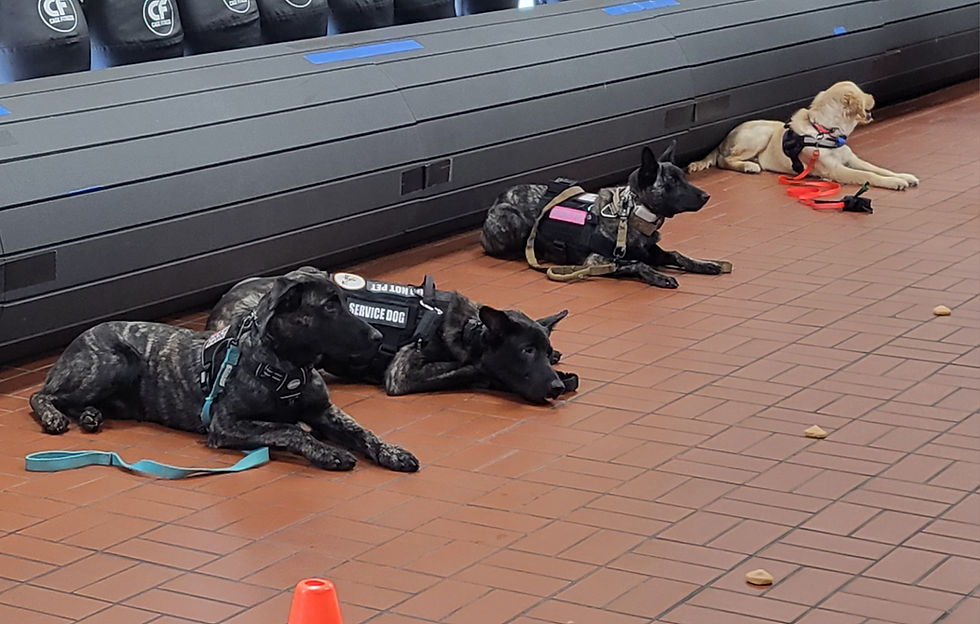
What really makes a service dog successful isn’t the breed, but the quality of training. Training teaches a dog how to perform life-changing tasks while also preparing them to handle the distractions, stress, and unpredictability of the real world. A well-trained dog can calmly walk through a grocery store, ignore food on the ground, and focus on their handler no matter what’s happening around them.
Even within popular service dog breeds, not every puppy makes the cut. And sometimes, a less common breed, or even a mixed breed, can excel if they have the right temperament and go through thorough, consistent training. At the end of the day, it’s the training that shapes a dog into a dependable partner, not just the name of the breed on their vet records.
Debunking Myths About Service Dog Breeds
When most people think of service dogs, they picture a big yellow Lab guiding someone across the street, or maybe a Golden Retriever wearing a vest in the grocery store. While these breeds are common, service dogs actually come in all shapes, sizes, and backgrounds. The truth is, breed isn’t the deciding factor—temperament, health, and training are. Let’s break down a few common myths.
Myth 1: Service dogs have to be big dogs.
While large dogs are often chosen for mobility work (like helping a handler balance, brace, or pick up heavy items), smaller dogs can be just as life-changing. Small and medium-sized breeds are often trained for alerting tasks (such as detecting seizures, low blood sugar, or anxiety spikes) and are easier to travel with. A Chihuahua alerting to blood sugar changes is just as much a service dog as a German Shepherd helping with mobility.
Myth 2: Only certain “approved” breeds can be service dogs.
There’s no official breed requirement in the U.S. for service dogs. Organizations may have preferences, but legally, any breed or mix can qualify as long as the dog is trained to perform tasks that mitigate a disability. Breed stereotypes don’t define ability.
Myth 3: Purebreds are always better than mixed breeds.
While purebreds can offer predictability in temperament and health, mixed breeds are just as capable. Many mixed breed dogs have gone on to excel as service dogs. What matters most is the individual dog, not their pedigree.
Myth 4: If it’s the “right” breed, it will automatically make a good service dog.
Not every Labrador, Poodle, or Shepherd has the right temperament for service work. Some may be too shy, too energetic, or too stubborn. Each dog is an individual, and selection, socialization, and training make all the difference.

Final Thoughts
At the end of the day, service dogs are not defined by their breed but by their training, temperament, and partnership with their handler. Whether it’s a sturdy Labrador helping someone walk safely, a Poodle alerting to an oncoming seizure, or a mixed-breed rescue offering life-saving support, every service dog is unique.
If you take away one thing, let it be this: the best service dog isn’t the one that fits a stereotype, it’s the one that’s been carefully trained and matched to meet a person’s specific needs. Breed might shape how a dog looks or even what tasks they’re best suited for, but it’s the training and bond that truly make them a service dog.


Comments